Say "rugby" in Cardiff and someone pictures a lineout on a wet Saturday. Say it in Wigan and they picture a prop charging into three defenders on the fourth tackle. Same word, two different sports, and the confusion is not your fault. Both grew from the same root, and they still share a ball, a try line and plenty of vocabulary.
The rules separated more than a century ago, though, and the differences are big enough to change what you are watching. If you have ever switched on a match and wondered why nobody is competing for the ball on the ground, or why a try seems to be worth fewer points than you remembered, here is the short version.
Why Two Codes Exist At All
In 1895, clubs in northern England asked the governing body to compensate players for wages lost while playing. The request was refused, and those clubs broke away to form what became rugby league. Rugby union stayed strictly amateur until 1995.
That split shaped everything that followed. League had paying crowds and needed a game that ran to time, so it kept stripping out stoppages: lineouts disappeared in the early 1900s, the play-the-ball replaced the ruck, and a tackle count was introduced to keep the ball in play. Union kept the contest. Every ruck, maul and scrum is a small fight for possession, and that fight is the point.
The Tackle Is the Fork in the Road
Union: the tackle opens a contest
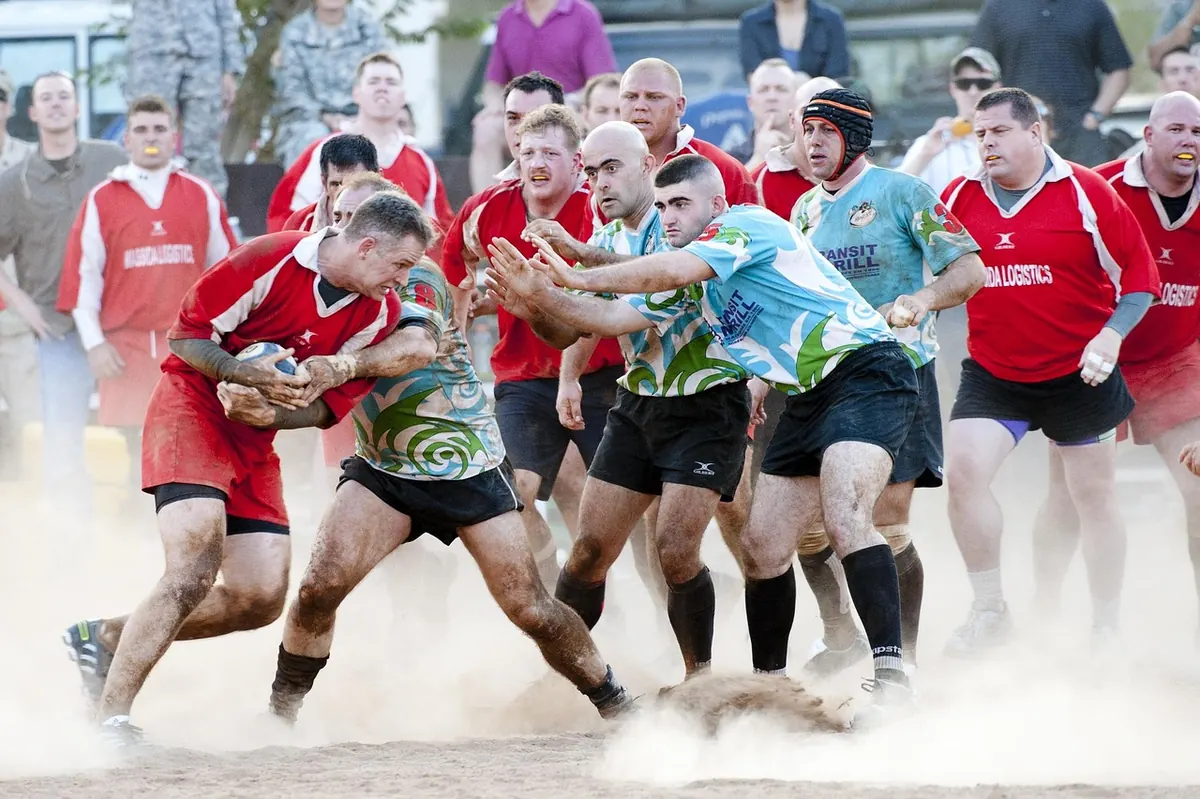
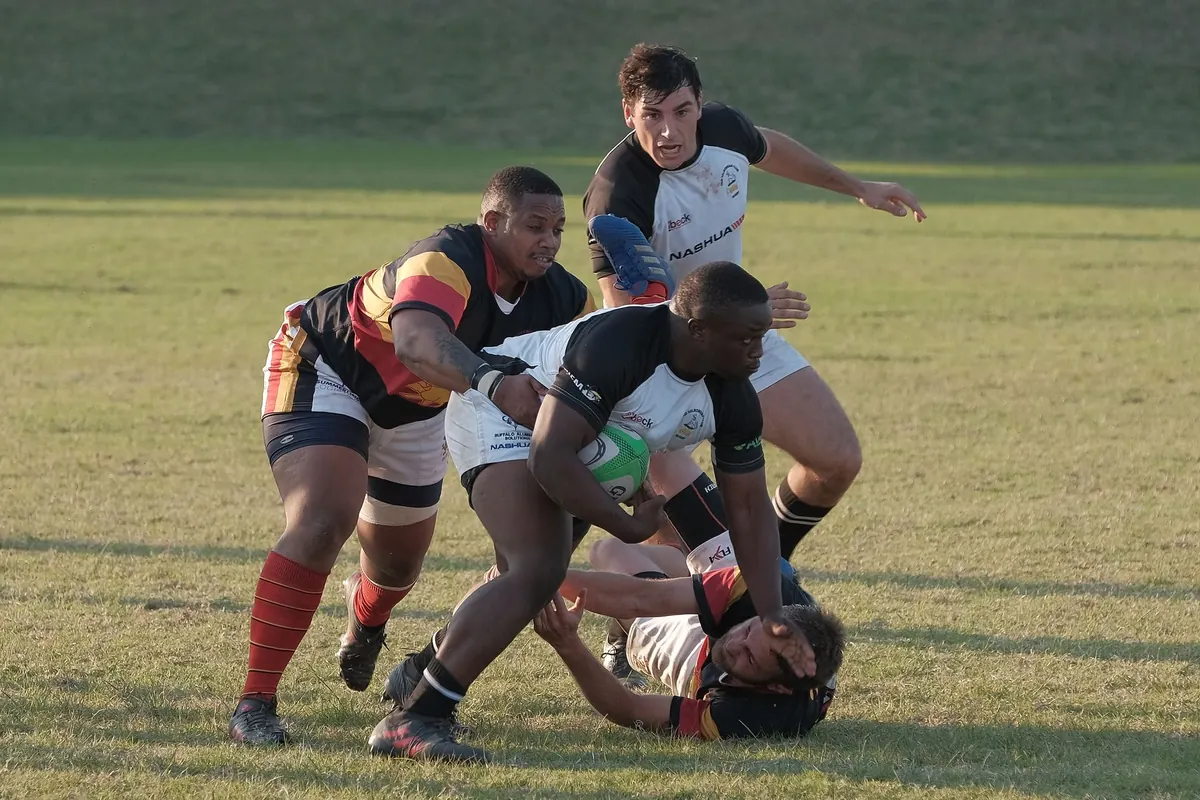
When a player is tackled in union, the ball goes to ground and both teams can compete for it. Supporters arrive to form a ruck, and defenders try to win the ball back by getting over it and staying on their feet. If the ball carrier is held up rather than taken to ground, a maul forms and the forwards drive. Referees police all of it closely: offside lines, no hands in the ruck, no collapsing. Nothing is automatic, so possession changes hands constantly.
League: the tackle is a countdown
In league, the tackled player gets to his feet and plays the ball backwards with his foot to a teammate. Tacklers must clear the area, and there is no ruck to contest, so the attacking side almost always keeps the ball. The game limits possession instead: you get six tackles to score or force a repeat set, then the ball is handed over.
That single rule explains most of what you see. Field position becomes currency. Teams kick on the last tackle to pin opponents deep, and a well-chased kick can be worth as much as a line break.
Scoring: Similar Numbers, Different Maths
The values look close, but they push teams in opposite directions.
- Union: try 5 points, conversion 2, penalty goal 3, drop goal 3.
- League: try 4 points, conversion 2, penalty goal 2, drop goal 1.
In union, a penalty is worth three, which is why teams happily take shots at goal from 40 metres and why a dominant scrum near the opposition line is so valuable. A drop goal being worth three also makes it a genuine weapon in tight matches, not a novelty.
In league, tries are worth four and penalties only two, so the maths nudges teams to keep the ball alive and attack rather than take the easy points. The one-point drop goal exists almost purely for breaking a late tie.
Bodies, Bench and Clock
Fifteen against thirteen
Union fields 15 players; league fields 13. Fewer bodies means more space, which is a large part of why league looks so much faster. Union packs eight forwards into a scrum. League scrums are uncontested, usually six against six, and exist mainly to restart play cleanly.
Replacements versus interchange
In league, a bench of four players shares a limited number of interchanges, and a player who comes off can return later. In union, teams name eight replacements, and once a player is substituted he generally cannot come back, apart from blood or head injury protocols. That makes union bench decisions far more permanent.
How time is kept
Both codes play 80 minutes. In union the clock generally keeps running while the ball is out of play, and the referee adds time at the end of each half. In league, professional competitions stop the clock for scrums, goal kicks and other restarts, so the 80 minutes is closer to 80 minutes of actual play.
Set Pieces: Lineouts and Scrums
Union has lineouts, and they matter. A throw near your own line is a genuine risk, and a stolen lineout can swing a match. Union scrums are contested and can be pushed, twisted and penalised, occasionally decided by a penalty try.
League has no lineouts. Scrums are a formality: the ball is fed in and the team with the feed almost always regains it. If you are watching league for the first time, do not wait for a set-piece battle — it is not coming.
What Each Code Feels Like to Watch
Union is stop-start by design. There are scrums, lineouts, penalties, kicks for territory and long passages where the ball never travels far. The tension comes from pressure building in one corner of the field, and from whether a team can survive a five-metre maul.
League is a rhythm. Six tackles, kick, six tackles, kick. Fatigue accumulates, defenders get isolated and gaps open in the last 20 minutes. If you enjoy watching athletes run into contact and keep going, league will grab you immediately.
How to Learn One Code This Weekend
- Pick one code and one competition, and stick with it for three matches before adding another.
- Watch the first half with the sound on. Commentary explains the rules you have not learned yet.
- In league, count the tackles out loud. Once you can feel the set building, the game makes sense.
- In union, watch only one forward at each ruck for ten minutes. You will see the offside line and the fight for the ball.
- Ignore the scoring table at first. Learn why the teams are playing the way they are, and the points follow.
Give either code two full matches. The first is confusing, the second is interesting, and by the third you will have opinions about the referee. That is usually the sign that a sport has got you.
Photo: Brendon Spring / Pexels